





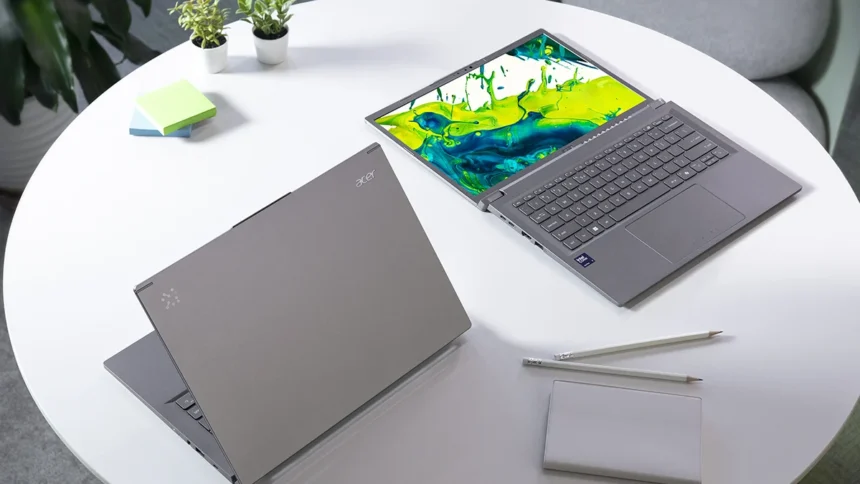
Fifty years ago, a small group of engineers in Taiwan started a company called Multitech, years before “personal computer” meant anything to most of the world. Stan Shih and his partners built what would eventually become Acer into one of the defining names in global computing, and in 2026, the company is using its half-century mark not just to look back, but to lay out a genuinely different bet on where it goes next. That mix, honoring the past while quietly stepping outside the category that made the brand famous, is what makes this particular anniversary worth paying attention to.

Fifty Years, One Very Different Industry
When Acer was founded in 1976, the internet didn’t exist in any recognisable form, and personal computers were still a niche curiosity rather than a household fixture. Watching the company’s product lineup today, laptops that adjust to your workflow using on-device AI, tablets built for hybrid creative work, gaming rigs pushing 240Hz OLED panels, it’s a useful reminder of just how much ground has shifted underneath an industry that Acer helped shape from close to its beginning. The company now operates in more than 160 countries, and its Computex 2026 presence in Taipei doubled as both a retrospective and a genuine product showcase, spanning everything from thin productivity notebooks to serious gaming hardware.
The AI PC Push Is the Real Headline
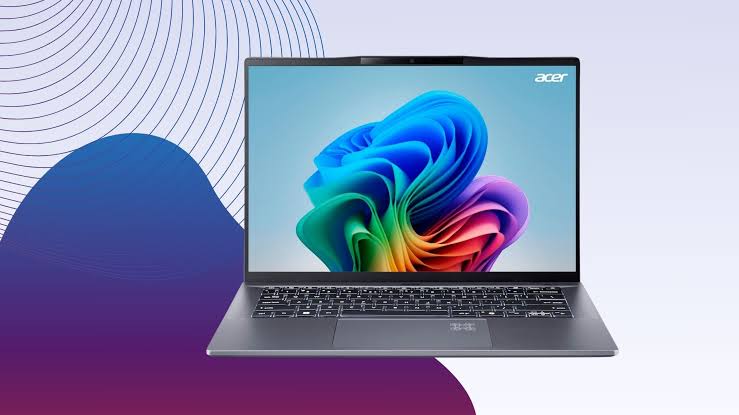
If there’s one thread running through Acer’s current lineup, it’s Copilot+ certification. The Aspire 14 AI and Aspire 16 AI, available in both AMD and Intel configurations, sit at the center of that push, built around dedicated AI processing for tasks like live captioning, on-device image generation, and Windows’ recall-style productivity features. What makes this meaningful rather than just another spec bump is pricing: Acer has positioned its AI PC lineup as one of the more accessible entry points into Copilot+ territory, rather than reserving the category for premium-tier devices alone. At Computex 2026, that lineup expanded further with new Swift and TravelMate models, including the Swift Air 14, a lightweight notebook built around Intel’s newest Core Series 3 processors.
Gaming Still Gets the Spotlight
For a company increasingly focused on AI productivity, Acer hasn’t stepped back from gaming, if anything, its Computex presence leaned harder into it this year. The Predator Helios Neo 16 AI, built around RTX 5070 Ti graphics and a 240Hz OLED display, represents the high end of that push, while the Nitro Blaze handheld lineup targets the growing portable gaming category more directly. Acer also showed off SpatialLabs glasses-free 3D display technology, a genuinely distinctive bet in a monitor market where most competitors are still fighting over refresh rates and panel type.
Looking Past the PC Entirely
The more interesting story, arguably, is what Acer says comes next. President Andrew Hou used the company’s Computex 2026 briefing to lay out four categories the brand intends to build around over its next fifty years: industrial computing, energy, smart medical technology, and home appliances through its Acerpure brand, which already covers eight product categories including air purification and small kitchen appliances. Acer has already acquired eight companies in the industrial computing space alone, including point-of-sale manufacturer Posiflex, a clear signal that this isn’t just anniversary messaging but an active acquisition strategy already underway.
Why This Matters Beyond Spec Sheets
It’s worth being honest about where Acer sits competitively: strong value in the budget-to-mid-range laptop and monitor space, genuinely competitive gaming hardware, but not historically known for premium build quality or standout after-sales support compared with rivals like Dell or ASUS. What the 2026 anniversary lineup suggests is a company trying to change that calculus, not by chasing the premium tier directly, but by expanding into categories where competition looks entirely different. Whether Acer succeeds in industrial computing or home appliances the way it did in personal computers remains genuinely uncertain. But for a brand whose fifty-year story mirrors the PC industry’s own rise, betting on a future beyond the PC is, in its own way, the most on-brand move Acer could make.