




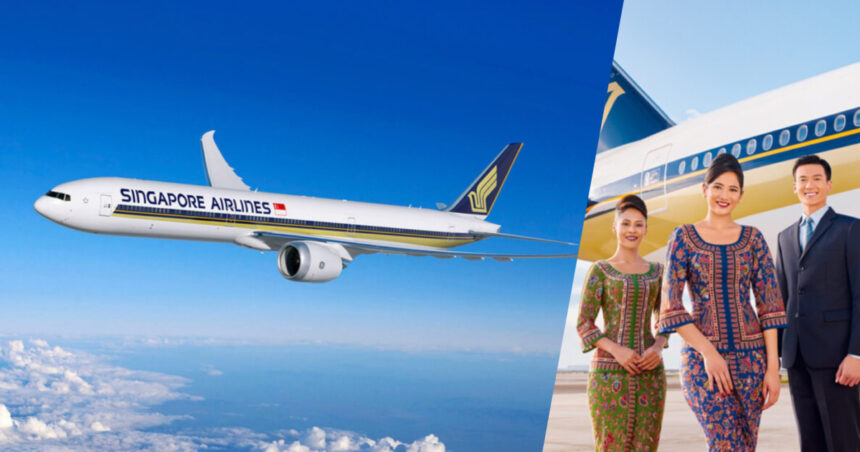
Some airlines compete on price. Some compete on routes. Singapore Airlines competes on an entirely different level — building an experience so consistently exceptional that it has become the global benchmark against which every other carrier is measured. Founded in 1947 as Malayan Airways and rebranded as Singapore Airlines in 1972, the carrier has spent more than five decades converting a small city-state’s geographic limitations into a strategic advantage, positioning Changi Airport as the premier connecting hub between East and West. In 2026, Singapore Airlines is not resting on that reputation — it is extending it with record financial results, a significantly expanded network, and a technological transformation programme that signals where premium aviation is heading next.
Record Performance Across Every Metric
The numbers behind Singapore Airlines in FY2025/26 are genuinely historic. The SIA Group’s full-year operating profit rose 39% to $2.4 billion as revenue reached a record level. The two airlines — Singapore Airlines and its low-cost subsidiary Scoot — carried a combined 42.4 million passengers in FY2025/26, a record figure up 7.7% over the previous year, with the group’s load factor rising 1.1% to 87.7%, as demand outpaced capacity expansion. These are not incremental improvements — they represent a carrier operating at the highest financial and operational standard in its history, with profitability, passenger volume, and load factors all reaching peaks simultaneously.
The Fleet in 2026: Expansion, Modernisation, and Strategic Patience
The combined SIA Group operated a fleet of approximately 208 aircraft as of September 2025, with a further 67 jets on order. The most significant fleet story of 2026 is the Boeing 777-9 delay — Boeing confirmed that 777-9 deliveries will not begin until 2027, forcing a strategic pivot, with SIA officially stopping the 777-9 inclusion in its 12-month delivery outlook and shifting next-generation cabin products onto the A350 fleet instead. Rather than disrupting operations, the delay has accelerated investment in the existing fleet. Singapore Airlines has announced a S$1.1 billion investment in a multi-year programme to retrofit its 41 Airbus A350-900 long-haul and ultra-long-range aircraft — a commitment that ensures the cabin experience improves substantially well before the new Boeing fleet arrives.
The A380 Programme: A Flagship Back at Full Strength
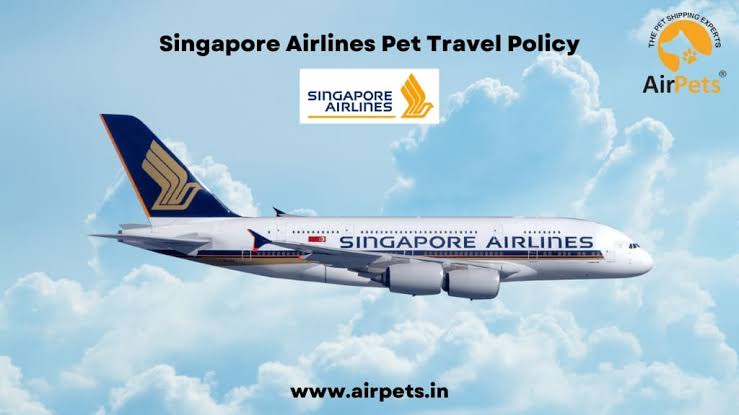
One of the most commercially significant developments of Summer 2026 is the restoration of Singapore Airlines’ Airbus A380 programme to full operational strength. Under its finalised Summer 2026 schedule, Singapore Airlines runs approximately 126 weekly A380 flights, up from 98 weekly flights during Summer 2025. The airline maintains consistent A380 service on high-demand trunk routes including London, Frankfurt, Sydney, and Dubai, with the Airbus A380 remaining central to Singapore Airlines’ long-haul capacity strategy, particularly on routes with strong premium demand and slot constraints. All operational A380s have been retrofitted with the airline’s 2017 cabin products, including its flagship Suites and upgraded Business Class seats — ensuring that passengers on every A380 service receive the full premium experience regardless of route.
A Network Expanding Into New Territory
Singapore Airlines’ route expansion in 2026 is among the most ambitious in its recent history. The airline will launch flights to Madrid via Barcelona from October 26, 2026, marking its return to the Spanish capital after 22 years — a route restoration that signals confidence in European premium demand. The airline is increasing capacity to London-Gatwick, Manchester, Milan, Munich, and Melbourne, as well as launching new flights to Western Sydney International Airport. Singapore Airlines will also begin daily non-stop services between Singapore and Western Sydney International Airport from November 23, 2026, subject to regulatory approval. Simultaneously, Air China and Singapore Airlines signed a Memorandum of Understanding to deepen commercial cooperation, while Malaysia Airlines and Singapore Airlines launched their strategic joint business partnership with new joint fare products for travel between Singapore and Kuala Lumpur.

Technology and the Passenger Experience
Singapore Airlines’ technology investments in 2026 go well beyond incremental improvements. From 2027, the carrier will offer high-speed broadband connectivity provided by SpaceX’s Starlink — a move that will set a new connectivity standard for long-haul aviation and significantly improve the working and entertainment experience for business travellers on ultra-long routes. On the artificial intelligence side, Singapore Airlines has partnered with OpenAI to enhance customer experience and operational efficiency, and partnered with Salesforce to develop AI-powered customer service applications — investments that will reduce response times, personalise the booking experience, and improve operational decision-making across the network.
Singapore Airlines is also preparing to roll out revamped cabins on its long-haul fleet, along with an update to its inflight catering and entertainment offerings — a comprehensive product refresh that will arrive incrementally from 2026 through the early 2027 fleet retrofit programme.
KrisFlyer: The Loyalty Programme That Rewards Consistently
KrisFlyer, Singapore Airlines’ loyalty programme, remains one of the most generous and flexible in global aviation. Award redemptions are available across every cabin on mainline Singapore Airlines and Scoot services, with Star Alliance partnerships extending earning and redemption options to over 40 member carriers worldwide. Short- to medium-haul routes such as Singapore to Hong Kong, Delhi and Mumbai frequently offer Saver-level award space, including in premium cabins — making KrisFlyer disproportionately valuable for Asia-Pacific travellers seeking premium cabin access at affordable point levels.
Singapore Airlines’ position at the top of global aviation is not accidental and not static. It is the result of consistent financial discipline, deliberate product investment, and a strategic agility that turns supply chain delays and geopolitical disruptions into opportunities to accelerate planned improvements. In 2026, with record passengers, record revenue, a restored A380 programme, Starlink connectivity coming, and a S$1.1 billion cabin retrofit underway, the world’s best airline is making a compelling case that the title is not up for discussion.