





Most people picture the Maldives in daylight.
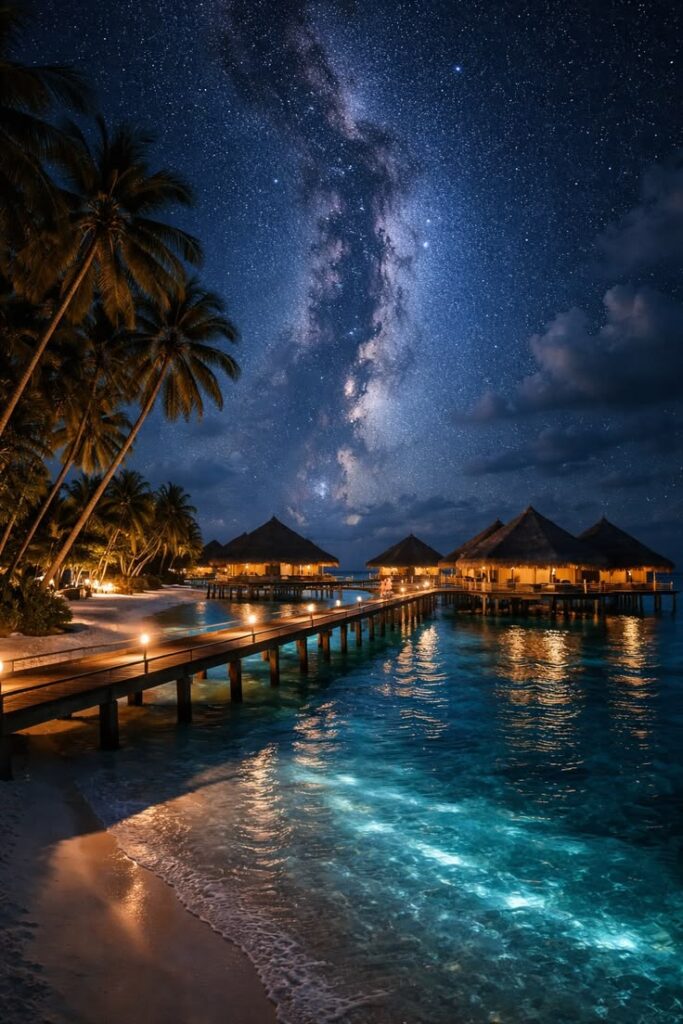
Clear blue lagoons. A strip of white sand. Palm trees leaning over the water. An overwater villa with a ladder that leads straight into the sea. It is the kind of place that looks almost too perfect in photographs.
But wait until night.
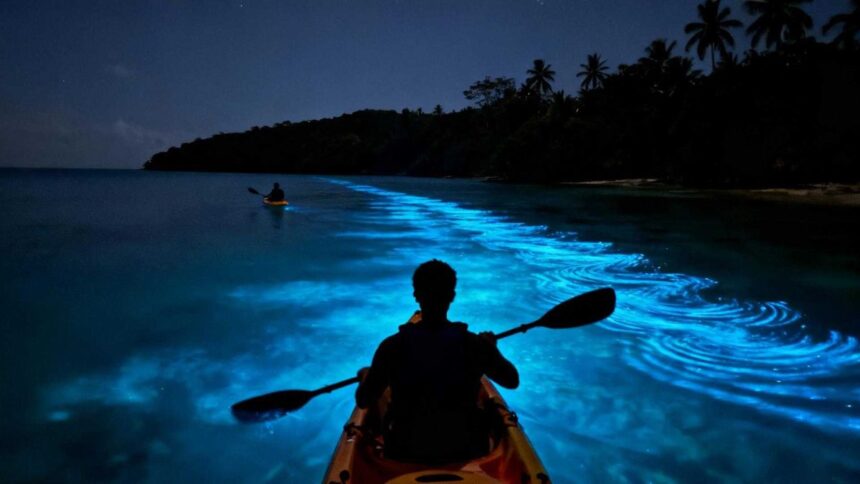
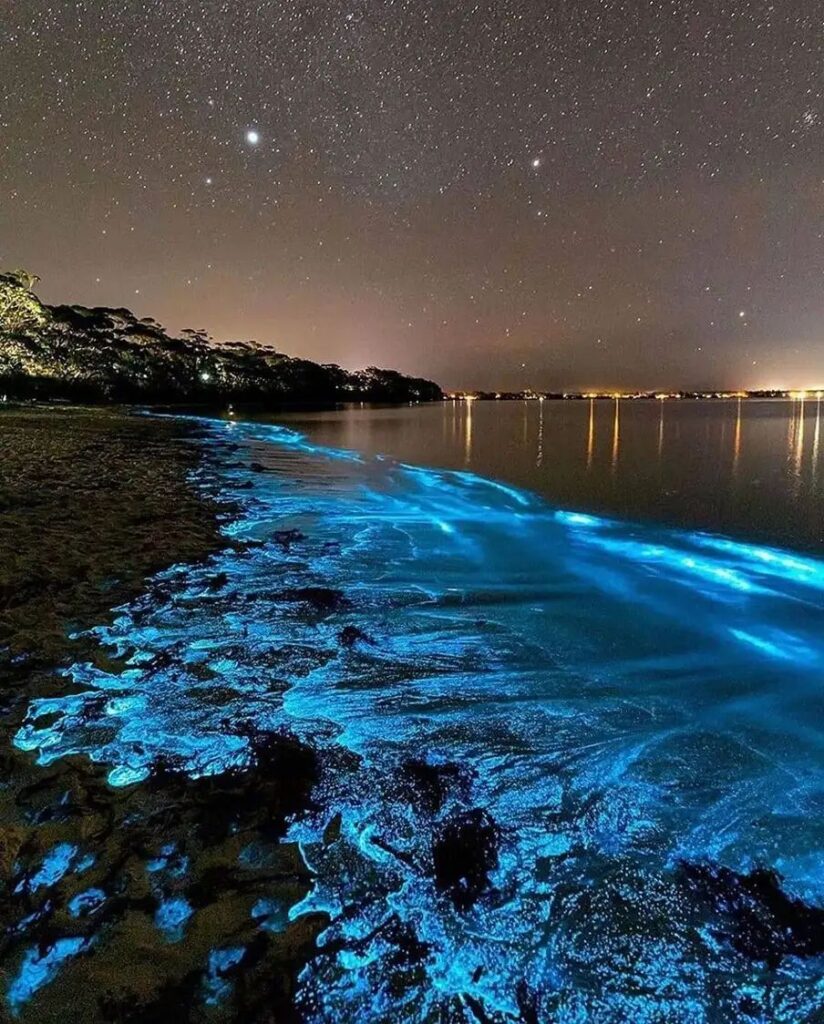
When the resorts become quieter and the last traces of sunset disappear, the ocean can put on a completely different show. On the right night, the waves begin to sparkle with tiny blue flashes, as though someone has scattered stars across the water.
This is bio luminescence, and seeing it in the Maldives is one of those travel experiences that is difficult to describe until you have actually stood on the beach and watched it happen.
Why Does the Water Glow?
The glow comes from microscopic marine organisms called dinoflagellates. When the water around them is disturbed, they produce a brief flash of blue-green light.
That means something as simple as a breaking wave can make the shoreline shimmer. Move your hand through the water and small points of light may appear around your fingers. Walk through the shallows and your footsteps can leave a glowing trail for a second before it disappears.
It sounds like something from a fantasy film, but it is a natural marine phenomenon.
The Maldives is particularly atmospheric for this because many of its islands are far removed from large cities and their bright night skies. On a dark beach, with very little artificial light around you, even a modest display of bio luminescence can look extraordinary.
Where to Look for Bioluminescent Waves
Vaadhoo Island is probably the name most travellers associate with the phenomenon. Its famous “Sea of Stars” has helped put Maldivian bio luminescence on travel wish lists around the world.
But there is an important catch: the glowing sea does not belong to one particular island.
Bioluminescence can occur in different parts of the Maldives when the conditions are right. Its appearance depends on several natural factors, including plankton populations, currents, weather and water conditions.
In other words, booking a trip to a famous bioluminescent beach does not guarantee a glowing ocean.
That unpredictability is worth remembering. If someone promises you a spectacular display on a specific night, take it with a little caution. Nature does not work according to a resort timetable.
How to Experience It
If you are hoping to see bioluminescent beaches in the Maldives, darkness is your friend. A night with little moonlight can make the glow easier to notice, particularly away from bright resort lighting.
Give your eyes some time to adjust when you step outside. Don’t expect the entire ocean to suddenly turn neon blue. Sometimes the effect is faint, appearing only in individual waves. Other nights can be much more impressive.
A quiet walk along the shoreline can be enough. If swimming is permitted and conditions are safe, gently moving your hand through the water may reveal tiny flashes around it.
Just remember that this is a living marine environment, not a special-effect attraction. Follow local safety advice, especially around reefs and currents, and avoid using lotions, chemicals or other substances in the water simply to create a stronger effect.
The Maldives You Don’t See in Photographs
There is something particularly nice about experiencing the Maldives after dark because there is less to look at.
During the day, every direction competes for your attention. The water is blue, the sand is bright and there is always another photograph to take.
At night, you listen instead.
You hear the waves rolling onto the beach. You feel the warm air moving through the palms. And then, perhaps, a wave breaks and a few blue sparks flicker across the shore.
For a moment, you stop thinking about taking a picture.
You simply watch.
That is what makes chasing bioluminescent waves in the Maldives so appealing. There is no guarantee that the sea will glow on the night you arrive, and perhaps that makes the experience even better. You are not checking off another attraction. You are waiting for nature to decide whether it wants to put on a show.
And if it does, stay a little longer.
The Maldives has plenty to offer after sunset.