






The hotel industry has always had giants. But in 2026, Marriott International occupies a position that goes beyond scale — it has built the most diversified, most geographically distributed, and most financially resilient hospitality portfolio in the world, and it is still growing at a pace that most companies half its size would struggle to match. Understanding what Marriott is today requires looking beyond the familiar lobbies and loyalty points, into a strategic machine that is simultaneously the world’s largest hotel company, one of its most active real estate dealmakers, and an increasingly sophisticated technology and lifestyle brand.
The Scale Is Genuinely Historic
The numbers behind Marriott in 2026 are not incremental — they are structural. 2025 was a defining year for Marriott, marked by bold expansion and global milestones, with the company scaling its iconic brands to new markets around the world and strengthening its portfolio across every segment. For the full year 2025, net rooms grew over 4.3 percent, worldwide RevPAR increased 2 percent, and the company’s fee-driven, asset-light business model generated over $4.0 billion of capital returns to shareholders. Moving into 2026, momentum accelerated further: in the first quarter of 2026, global RevPAR increased 4.2 percent worldwide, with 4.0 percent growth in the US and Canada and 4.6 percent growth in international markets, while the company added roughly 15,900 net rooms globally during the quarter and net rooms grew 4.5 percent from the end of the first quarter of 2025.
The development pipeline tells the longer story. At the end of the first quarter of 2026, Marriott’s worldwide development pipeline reached a new record and totalled over 4,100 properties and nearly 618,000 rooms, with 43 percent of pipeline rooms under construction including hotels that are pending conversion. These are not aspirational projections — they represent signed contracts, committed capital, and construction crews already on site.
A Brand Portfolio That Covers Every Traveller Segment
Marriott’s competitive moat is not any single hotel or any single brand — it is the breadth of its brand architecture, which spans 32 hotel brands across every price point and traveller profile. From the ultra-luxury of The Ritz-Carlton and St. Regis at one end, through the lifestyle credentials of W Hotels and Edition, the reliable mid-market strength of Courtyard and Fairfield, to the extended-stay proposition of Residence Inn and Element — Marriott can serve the same traveller at every stage of their journey, across every type of trip, in virtually every market where hotels operate. 2025 was marked by new brand offerings, meaningful acceleration in midscale, extraordinary luxury expansion, and record-breaking growth in branded residences.
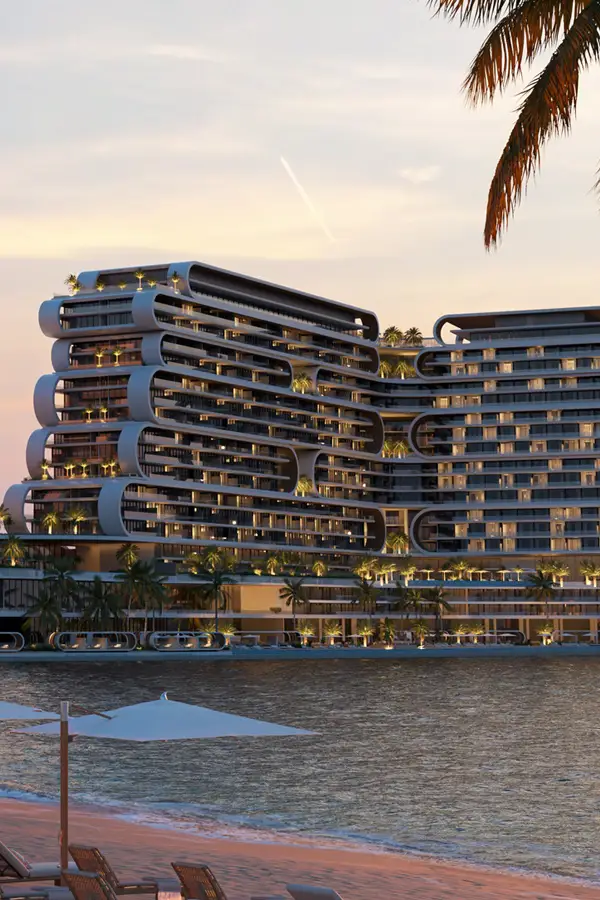
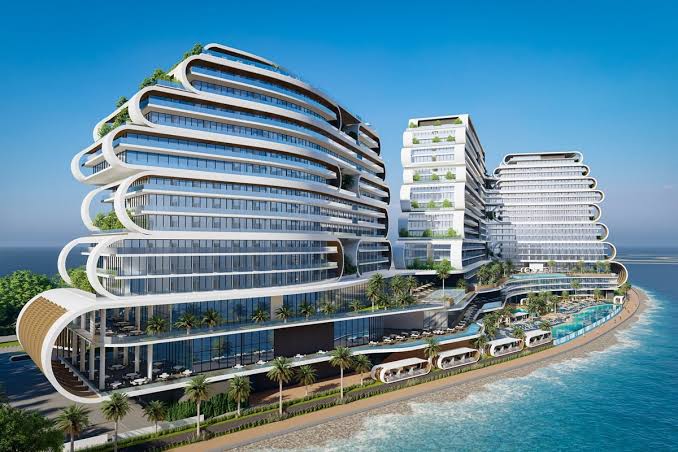
The branded residences segment is worth particular attention. As travellers increasingly seek non-traditional and immersive experiences, Marriott’s branded residences model — in which the company’s luxury brands license their identity to private residential developments — has become one of the industry’s most profitable and fastest-growing ancillary revenue streams, with record growth in 2025 confirming its commercial maturity.
Regional Growth Records That Signal the Future
The geographic distribution of Marriott’s 2025 deal signings reveals where the company is investing most aggressively. Marriott signed nearly 1,200 organic deals globally in 2025 and celebrated record-breaking deal signings in various regions — in the Caribbean and Latin America region, Marriott signed a record 94 deals; its Asia Pacific excluding China region saw an all-time high of 187 deals; and in Greater China, the company signed a record 201 deals. The India story is equally significant: anchored by a founding multi-unit deal in India, the brand opened 37 properties of approximately 2,600 rooms in 23 cities across the country by year-end 2025.
These regional records are not coincidental — they reflect a deliberate strategic bet on the markets where middle-class travel demand is growing fastest and where branded hotel supply remains structurally undersupplied relative to demand. Asia Pacific, India, and Latin America are not future markets for Marriott; they are current priority markets generating deal volumes the company has never previously achieved.
The citizenM Acquisition and the Lifestyle Pivot
One of Marriott’s most strategically revealing moves in the recent period was its acquisition of citizenM — a Dutch boutique hotel brand known for compact, design-forward rooms, technology-first check-in, and a distinctly urban, millennial-oriented brand identity. The integration of citizenM rooms into Marriott’s system and platforms represents a deliberate play for the lifestyle and design traveller segment that has historically gravitated toward independent boutique properties rather than branded chains. By acquiring rather than building, Marriott accelerated its credibility in this segment by years — and gained a brand with genuine independent cachet that organic development could not have produced at comparable speed.
Marriott Bonvoy: The Loyalty Programme as a Business in Itself
Marriott Bonvoy, the company’s unified loyalty programme, functions less as a customer retention tool and more as a standalone business that spans hotels, credit cards, travel experiences, and lifestyle benefits. With over 210 million members globally, Bonvoy generates co-branded credit card revenue, drives direct booking behaviour, and provides Marriott with one of the largest proprietary travel datasets in the world — informing everything from hotel development decisions to personalisation technology investments. For travellers, the programme’s breadth means that points earned on one trip can unlock experiences across 32 brands in 140 countries — a value proposition no single-brand loyalty programme can match.
The 2026 Outlook: Confident but Measured
For full year 2026, Marriott expects worldwide RevPAR to rise 1.5 to 2.5 percent, net rooms growth of 4.5 to 5 percent, adjusted EBITDA growth of 8 to 10 percent, and more than $4.3 billion of capital returns to shareholders. These are not aggressive projections — they reflect a company that has learned to calibrate growth expectations against macroeconomic uncertainty while maintaining the structural confidence that comes from a pipeline of nearly 618,000 rooms, a loyalty base of over 210 million members, and an asset-light model that generates cash through fees rather than property ownership. Marriott does not own most of its hotels — it manages and franchises them, which means its revenue scales with industry growth without the capital intensity that makes traditional hotel ownership vulnerable to downturns.
In an industry still navigating the complexities of post-pandemic demand patterns, evolving traveller expectations, and intensifying competition from alternative accommodation platforms, Marriott’s combination of brand depth, geographic diversification, financial discipline, and development momentum places it in a position that very few companies in any industry currently occupy. The world’s largest hotel company is not resting on its scale — it is using that scale to move faster than any competitor can match.